Filmmaking

Commercial and TV ad production

One shoot, two worlds: an online commercial in several versions with subtitles, and a TV spot delivered broadcast-ready at EBU R128 loudness.

Online commercial or TV spot: one shoot, two worlds

Format

One shoot, two worlds

Shoot, 16:9 masterYouTube, website, TVcaption
9:16Reels, TikTok, Shorts, vertical, with captions
4:5feed, the largest space in the feed
1:1feed, square
TV spot: 30, 20, 15 and 10 sOnline: 6, 15 and 30 scaptions on every version
Streaming
Streaming 48.6%
Broadcast
Broadcast 19.2%
Cable
Cable 20.4%
Other
Other
Half of TV screen time is already streaming, so the spot is made for both worldsNielsen The Gauge, May 2026, USA, published 28 July 2026: share of TV viewing time

Online commercial: versions, subtitles, vertical cut

A commercial sells one offer, in short form. Online you do not need one file but a whole set: landscape 16:9 for YouTube and the website, vertical 9:16 for Reels, TikTok and Shorts, 4:5 and 1:1 for the feed, all with subtitles, because in the feed the video starts without sound. The lengths are 6, 15 and 30 seconds: the 6-second cut is the reminder, the 15 is the ad, the 30 is the story.

The TV spot can come from the same shoot, but with broadcast-ready delivery: exact loudness, technical acceptance, the channel's format. And the TV screen is now half internet: according to Nielsen's May measurement published on 28 July 2026, 48.6 percent of US TV viewing time was streaming, 19.2 percent terrestrial and 20.4 percent cable. That is why a commercial is made for both worlds.

Process

From brief to broadcast-ready file

1. Briefone page, gets everyone on the same page
2. Concept and script2 or 3 directions, storyboard
3. Pre-productionlocation, talent, crew, permits
4. Shoot1 or 2 days, shots planned for every version
5. Edit, sound, colorin-house studio, calibrated monitor
6. Versions and deliveryper platform, broadcast-ready for TV

Approval at the end of every step

scriptstoryboardfirst cutfinal versions
Six steps, with deadlines fixed in advanceYou approve the script, the storyboard and the first cut before the next step starts. The versions are already in the script, so the shoot covers every length.

How it is made: from brief to broadcast-ready file

Six steps with deadlines fixed in advance. Brief: what we sell, to whom, where the film runs, on one page that gets everyone on the same track. Concept and script: two or three directions, from these one fully developed script and storyboard. Pre-production: location, cast, crew, wardrobe, permits. Shoot: one or two days, with shots planned in advance for every version. Editing, sound and colour grading in our own studio. Versions and delivery: exported per platform, with a broadcast-ready file for TV.

Approval at the end of every step is yours: you sign off the script, the storyboard and the first cut before the next step starts.

Four lengths, one shoot

We decide the lengths at the script stage, not afterwards. Each one is a separate cut with its own rhythm and sound mix.

30 seconds

The full story: situation, turn, promise, brand.

This opens the campaign, this is where the viewer gets to know the film. The super, the logo and the closing message find their place here, and they sit in the same spot in the shorter versions too.
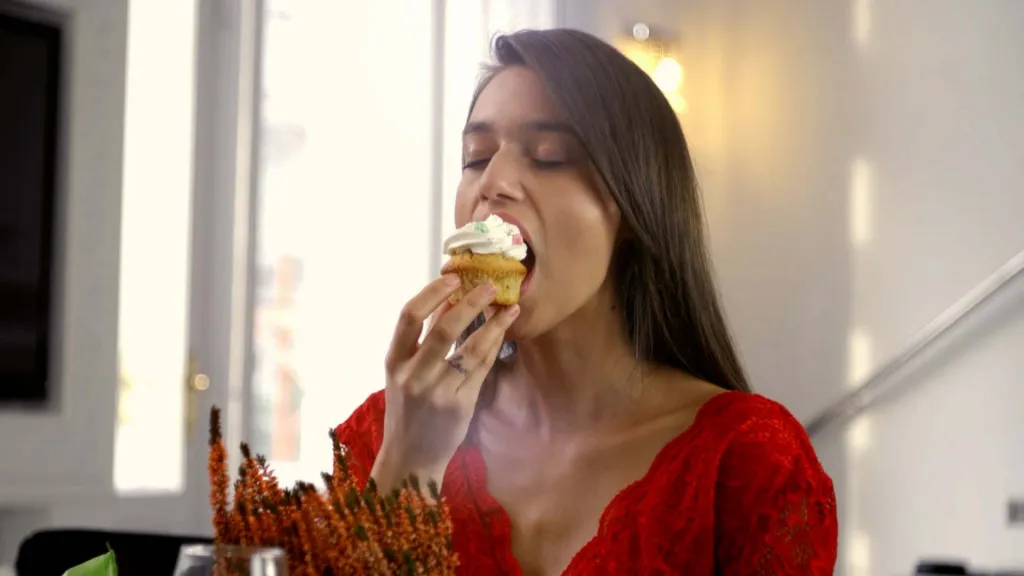

20 seconds

The condensed version: the same story with fewer scenes.

In the media plan it runs where the 30-second spot would be too expensive but the story still needs room.

15 seconds

One situation and the promise. The most common online and TV length, this is what runs in most places.

We mark in the script in advance which scene stays in.

10 seconds

The reminder in the second half of the campaign: one image, one sentence, the brand.

It only works if the viewer has already seen the long version, so the image and the sound stay the same.

Broadcast-ready delivery: the technical parameters of the TV spot

Commercial channels accept the ad in 16:9 HD through their own ingest system, with loudness and safe area according to the EBU recommendations. In the studio we set the export to these values, so the spot does not come back from technical acceptance.

PropertyValue
Aspect ratio and resolution16:9, 1920 × 1080
Frame rate25 fps, 50i
FileXDCAM HD 422, MXF OP1a
LoudnessEBU R128, −23 LUFS, peak max. −3 dBTP
Safe areaEBU R95, graphics 5% (1728 × 972), action 3.5% (1786 × 1005)

We handle the delivery to the channel's ingest system, and we manage the confirmation too.

Technical acceptance, safe area, equipment

Broadcast-ready delivery

XDCAM HD 422 and EBU R128

Aspect ratio and resolution16:9, 1920 × 1080
Frame rate25 fps, 50i
FileXDCAM HD 422, MXF OP1a
LoudnessEBU R128, -23 LUFS, peak -3 dBTP
loudness meter
0-10-20-30-40-3 dBTPmax. peak-23 LUFSprogram loudness
We set the export to these valuesWe measure sound with meters, not by ear: the spot is no louder than the program and passes ingest. We handle delivery to the channel's ingest system.
Safe area

EBU R95: where captions and logos go

16:9
1920 × 1080 px, 16:9 · EBU R95: graphics (5%) and action safe (3.5%) area
54 px96 pxGraphics 5%: 1728 × 972 pxchannel logosupers, legal text, websiteAction 3.5%: 1786 × 1005 px
Sides96 px (5%)
  • frame edge, some TVs crop it
Top and bottom54 px (5%)
  • frame edge, subtitle strip
Action3,5%, 1786 × 1005 px
  • action safe area
Top right cornerdepends on the channel
  • the channel's own logo
Supers and logo stay within the central 1728 × 972 pixelsSome TVs crop the edges; the top right corner belongs to the channel logo.
Equipment

Camera, lenses, sound, light

Camera and lenses
  • Sony FX3, Sony A7 IV
  • Atomos Ninja field monitor
  • Angelbird backup recording
  • Zeiss Batis 18, 25, 40, 85, 135 mm
  • Zeiss vintage 20, 35, 50, 85, 135 mm
  • Sony 16-35 and 24-70 mm
  • ND, polarizer and Pro-Mist filters
  • Rig, tripod, car and table top rig
Sound
  • Sennheiser G4 sets
  • with broadcast standard microphones
  • Rode shotgun microphones
  • Rode lavalier mics
  • Hollyland Lark lavalier mics
  • Dynamic studio microphones
  • Sennheiser HD25 monitoring headphones
Light
  • 4 × Zhiyun Molus X100 RGB Pro
  • 3 × De Sisti Magis 650 W halogen
  • Godox RGB LED tubes
  • Ulanzi RGB LED tubes and cubes
  • Softboxes in every size
  • Reflectors of every type
  • Additional lighting
For photo: Hasselblad H3D medium format, Sony A7 IV, 2 × Godox AD200 Pro, Godox system flashes
Our own camera, lenses, sound and light on every shootFootage is recorded to dual memory cards, with Angelbird backup recording. Dedicated rig and support for car shoots and table top work, mobile photo studio.

Broadcast-ready file: XDCAM HD 422 and EBU R128

The TV spot is delivered as a 1920 × 1080 pixel file at 25 fps or 50i, with the XDCAM HD 422 codec in an MXF OP1a container. We mix the sound according to the EBU R128 recommendation: programme loudness −23 LUFS, peak level max. −3 dBTP, so the spot is not louder than the programme and the channel's acceptance measurement passes it.

We measure the mixed sound in the studio with instruments, not by ear. The online version comes from the same mix, where subtitles replace the sound in muted playback.

TV ad safe area: EBU R95

In a TV ad at 1920 × 1080 pixels, supers and logos belong in the 5 percent graphics safe area, that is the central 1728 × 972 pixels: 96 pixels stay free on the sides, 54 at the top and bottom. The important action stays within the 3.5 percent action safe area, the central 1786 × 1005 pixels.

Supers, legal text, logo, phone number and website all go into the graphics safe area, because some TV sets crop the edges. The top right corner is taken by the channel's own logo, we put nothing there.

What we shoot with: camera, lenses, sound, light

Camera: Sony FX3 and Sony A7 IV, with on-set monitor (Atomos Ninja) and Angelbird backup recording. Lenses: the complete Zeiss Batis range (18, 25, 40, 85 and 135 mm), the complete Zeiss vintage range (20, 35, 50, 85 and 135 mm), Sony 16-35 and 24-70 mm, professional ND, polarising and Pro-Mist filters. Complete rig and tripod sets, a separate rig for car shoots and table top recording.

Sound: Sennheiser G4 sets with broadcast microphones, Rode shotgun and lavalier microphones, Hollyland Lark lavaliers, Sennheiser HD25 monitoring headphones. Light: four Zhiyun Molus X100 RGB Pro, three De Sisti Magis 650 W halogen, Godox and Ulanzi RGB LED tubes and cubes, softboxes and reflectors in every size.

Post-production in our own studio, with data security

Post-production

Color and sound in our own studio

Calibrated 4K monitors · OLED and LED, 10 and 12 bit · certified calibration every year
Rec. 709sRGBHDR10Dolby Vision HDR
4 master workstations128 GB DDR5, 12 GB GPU, 2 TB SSD, 40 TB HDD, replaced every two years
Blackmagic DeckLink 4K Extreme 12Gmonitoring card
Solid State Logic and Universal Audioaudio interfaces, SSL UF8, UF1, UC1 controllers
Genelec 8030, 8050, 6010three studios, acoustics measured by a sound engineer
Apple MacBook Profor work in the field
Sounds and looks the same on TV, phone and laptopWe check color on a calibrated monitor and sound in an acoustically measured studio.

Editing, colour grading and sound mixing in our own studio

We work on four master workstations, each with at least 128 GB DDR5 memory, a 12 GB graphics card, 2 TB SSD and 40 TB HDD, replaced every two years with the latest models. We view the picture on 4K, 10 and 12 bit OLED and LED monitors, calibrated with certification every year to the Rec. 709, sRGB, HDR10 and Dolby Vision HDR standards, through a Blackmagic DeckLink 4K Extreme 12G monitoring card.

We mix the sound on Solid State Logic and Universal Audio interfaces with SSL UF8, UF1 and UC1 controllers, in three studios on Genelec 8030, 8050 and 6010 monitors, in acoustics measured with instruments by a sound engineer. That is why the same spot sounds and looks the same on TV, on the phone and on the laptop.

Data backup

Three copies, two sites

Dual cardstwo cards record simultaneously
Master PCcontents of one card
NASencrypted VPN, hashed backup
Master 2separate physical site
Working driveprocessing runs from here
Cloud deliveryindependent business cloud, another backup

Three copies, two of them in separate buildings

Copy 1master PC
Copy 2NAS, encrypted VPN
Copy 3master 2, separate site
The material survives fire, water or other damageStorage as agreed: included in the price under an annual contract, otherwise we delete all formats within 3 months of delivery. Raw footage is handed over on request.

Footage and backup: three copies, two locations

We record to dual memory cards. The content of one card goes to the master workstation, from there a mirror backup to our own NAS, which saves hashed over an encrypted VPN network, and the content of the NAS is mirrored to a second master workstation in another physical facility. That makes three copies, two of them in separate buildings: the material survives fire, water or any other damage. Processing runs from a working hard drive, delivery goes through an independent business cloud provider, which is one more backup.

We store the material as agreed: in an annual contract storage is part of the price, otherwise every format is deleted within 3 months of delivery. The agreement covers the final film to be delivered, the raw footage is handed over on separate request.

What do you get with a commercial?

Concept and storyboard

Two or three directions, from these one fully developed script and a drawn storyboard, for approval.

Shoot with our own crew and equipment

One or two shooting days, with shots planned in advance for every version, recorded to dual cards.

Editing, colour, sound

On calibrated monitors, in a measured studio, at EBU R128 loudness.

Versions for every platform

16:9, 9:16, 4:5 and 1:1, 6, 15 and 30 seconds, with subtitles, without watermark.

Broadcast-ready TV file and delivery

XDCAM HD 422, MXF OP1a, with EBU R95 safe area; we handle the channel's acceptance.

Usage rights and retention

Usage rights fixed in the contract, raw footage retained as agreed, handed over on separate request.

Films we have made

Commercials, TV spots, brand films, employer branding videos and music videos in one place. With the filter you can view the TV ads and the online ads separately.

BÁV Zálog

Classic Kitchen

Fütyülős

How much does a commercial cost?

We have no fixed package for commercials, because the price depends on the number of shooting days, the size of the crew, the cast, the location, the duration of the usage rights and the number of versions; TV delivery and media spend are separate items. Based on the brief we send a quote with a script and fixed deadlines, and work starts after agreement. If the film is part of a longer content production partnership, the terms of the 12, 24 and 36 month contracts can be found on the content production page.

Online commercial

  • Concept, script and storyboard
  • Shooting with our own crew and equipment, 1 or 2 days
  • Editing, colour grading and sound mixing in our own studio
Custom pricing

TV spot with broadcast-ready delivery

  • Everything in the online commercial
  • 30, 20, 15 and 10-second versions from one shoot
  • EBU R128 sound mix: −23 LUFS, peak −3 dBTP
Custom pricing

Oloren Hub

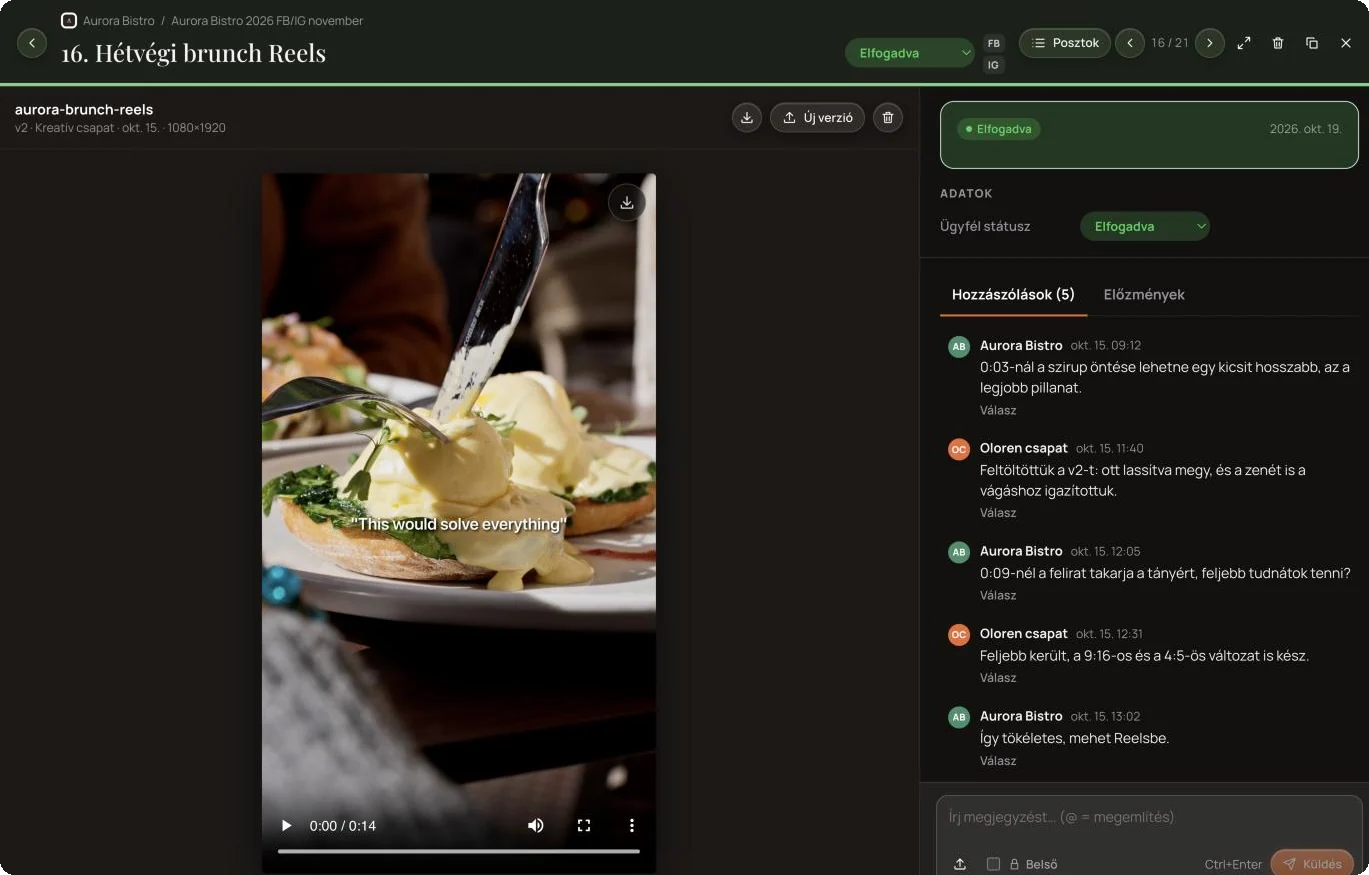
Video feedback down to the second

You watch the edit in Oloren Hub, right next to the post. Write down at which second you would change what, we upload the new version, and the conversation, versions and approval stay in one place until the video goes live.

  • Versions in orderEvery new cut arrives as a new version, older ones stay viewable.
  • Every format9:16, 4:5 and 16:9 versions on the same post.
  • Goes live after approvalThe approved video goes live at the set time on Reels, TikTok or YouTube.
Video approval and feedback in Oloren Hub

Frequently asked questions: commercials and TV ads

How long is a TV ad?

The most common are the 30, 20, 15 and 10 second spots. All of them can be cut from one shoot if the script is written for it.

In what format does a TV spot have to be delivered?

16:9, 1920 × 1080, 25 fps or 50i, XDCAM HD 422, MXF OP1a, sound according to EBU R128 at −23 LUFS, peak max. −3 dBTP. The channels work with their own ingest systems, we handle the delivery.

Can the same film run on TV and online?

Yes, but not in the same cut. Online needs subtitles and a vertical version, TV needs a broadcast-ready file and loudness acceptance.

How big is the safe area of a TV ad?

At 1920 × 1080 pixels, supers and logos get the central 1728 × 972 pixels, with a 5 percent margin. The action stays within the 3.5 percent action safe area, 1786 × 1005 pixels.

What camera and lenses do you shoot with?

Sony FX3 and A7 IV cameras, Zeiss Batis and Zeiss vintage lens ranges, Sony 16-35 and 24-70 lenses, Atomos Ninja monitor and Angelbird backup recording.

How long do you keep the raw footage?

As agreed. In an annual contract storage is part of the price, otherwise we delete every format within 3 months of delivery. The raw footage is handed over on separate request.

Request a quote for a commercial

Tell us what you want to sell, where the film would run (online, TV or both) and what length you have in mind, and we will get back to you with a quote. Work starts after agreement.

Tools we built ourselves

We built this software and use it every day ourselves.

Oloren

Request a call back

Tell us how we can help and we will get back to you within one working day.

Get a quote →Packages and prices