concept
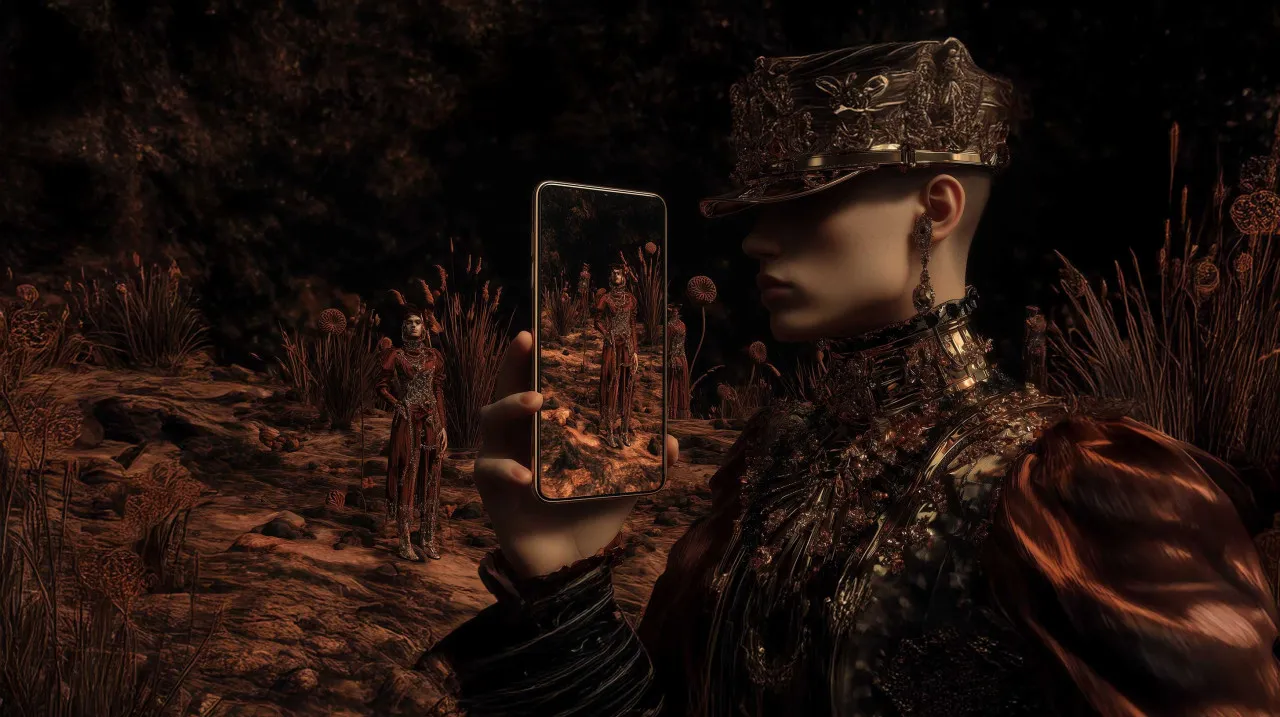
Concept sketch and moodboard before the shoot.
The client sees the direction right after the first meeting, instead of just imagining it.
Generation with a director's mindset: from references, with control, post-production and labelling, alongside the filmed footage. What we accelerate with AI, what we do not generate, and how we deliver it with clean rights.
Prompt, model, output, editor
Five stages, defined tasks
Three areas where we don't
Generative artificial intelligence is a statistical model that produces new images, video, audio or text from a text or image instruction (a prompt), based on patterns learned from its training data. It does not search for or splice together existing files: the model's weights describe a distribution, and every output is drawn from that distribution anew.
At Oloren, AI is one tool in the production chain, not the chain itself. Concept, script, camera, editing, colour grading, sound and legal compliance remain human responsibilities. AI speeds things up where variants, drafts, backgrounds, clean-up or translation need to be produced, and every output passes an editorial check before it reaches the client.
In five stages of production, for precisely defined tasks. Development: treatment variants, scene lists, moodboard copy. Pre-production: concept sketches, storyboards, preliminary animatics and virtual location scouting with image and video models. Shooting: preparing LED wall backgrounds and virtual set elements. Post-production: rotoscoping and masking, object removal, generative extension, upscaling, dialogue clean-up, subtitling, dubbing and translation. Delivery: format variants (16:9, 9:16, 1:1) and localised versions.
Every AI step is paired with a human step: the director or the editor selects from the generated material, the colourist and the sound engineer finish it, and the project manager checks the labelling and the legal conditions.
In three areas, as a matter of principle: the client's face and voice, health claims, and legally sensitive imagery.
The client's face and voice. We do not generate or synthetically alter the likeness or voice of a real person, except with written consent and a documented purpose. Under Section 2:48 of the Hungarian Civil Code, creating and using a person's likeness or voice recording requires their consent, and no AI tool overrides that.
Health claims. For healthcare clients we do not create generated before-and-after images, body depictions or any visual claim that real footage does not support.
Legally sensitive imagery. We do not generate recognisable protected characters, brand logos, copies of an artist's style or real events in a form that looks authentic. In 2026 these are the subject of live lawsuits, and in advertising the risk always falls on the client too.
ControlNet, LoRA, reference image
We accelerate eight tasks with AI: concept sketches and moodboards, storyboards and animatics shot by shot, backgrounds and set elements (for LED walls or as extensions), product variants (colour, setting, season), retouching and clean-up (object removal, masking), subtitles and dubbing for language versions, format variants (16:9, 9:16, 1:1, 4:5), and ad variants for A/B testing.
Each of these is produced alongside the filmed footage: beforehand as a draft, so the shoot starts with less risk and a more precise plan, and afterwards as extensions and variants, so one shooting day yields material for several channels and several markets. We do not generate real people, health claims or protected works.
What the client receives
For us, the prompt is the least important input. Consistency comes from the reference package: brand elements, product photos, colour palette, typography and mood references, which the model receives as reference images, as control signals (composition, depth, pose) or as an adapter trained on the brand. For images we use reference-capable models (such as Nano Banana Pro or Flux), for video we use models that handle multiple shots and native audio (such as Seedance, Veo or Kling), always chosen for the task, with a fixed seed, step count and guidance value so the result can be reproduced.
The director selects from multiple generations, and the chosen material goes through the same post-production chain as the footage: editing, colour grading, sound mixing, upscaling, subtitles. That way the generated element does not stand out next to the filmed footage, and the brand's visual world stays consistent shot by shot.
We do not hand over a file, we hand over documented, labelled material with clean rights. Resolution: 2K and 4K images, 1080p and 4K video, HDR on request. Formats: cut for each platform. Provenance data: the C2PA metadata and the invisible watermark remain intact, and we preserve them throughout the delivery chain. Label: an "AI-generated" or "AI-modified" notice wherever Article 50 of the EU AI Act requires it. Version log: prompt, reference, seed, selected variant, date. Legal documentation: tool licences, consents, terms of use.
The generated material goes into the same data backup protocol as the filmed raw footage, so it can be retrieved later, and the transfer of usage rights rests on a documented layer of human creative work.
Eight tasks we accelerate with AI. Each is produced alongside the filmed footage, beforehand as a draft, afterwards as an extension.
Concept sketch and moodboard before the shoot.
The client sees the direction right after the first meeting, instead of just imagining it.
Storyboard and animatic, shot by shot.
The crew knows exactly what to shoot, so the shooting day starts with less risk.
Background and set elements for an LED wall or as an extension.
The real talent and the real product stay filmed; only the surroundings expand.
The product in a different colour, setting or season, without a reshoot.
Several variants from one shot, always starting from the real product.
Retouching and clean-up: object removal, masking, upscaling.
What used to take hours of manual work is done in minutes, and the editor checks it before it goes into the film.
Subtitles and dubbing in other languages.
The same film runs in several markets, and a human checks the text before it goes out.
Variants in 16:9, 9:16, 1:1 and 4:5.
One shooting day delivers material for every channel, with the framing rethought for each one.
Several openings, copy lines and endings from the same material, for A/B testing.
We do not generate real people, health claims or protected works.
Prompt in, video out
Reference, control, post-production
What the director's eye adds
Usage and trust in numbers
Careless use is easy to recognise: a one-sentence prompt, the first acceptable generation, no references, no post-production, no labelling. In 2026 the result still fails in the same places: identity and texture drift between frames, unreadable or shifting text on moving objects, morphing hands, camera movement that ignores the prompt, wrong logos, packaging and product behaviour. Public examples: Coca-Cola's 2025 Christmas film (70,000 generated clips, positive social sentiment fell from 23.8 to 10.2 percent), the garbled captions and waxy faces of the Veo-made "1776" series, or the AI actress switching languages in a live interview in September 2026.
Consumers punish this: in the May 2026 survey by Canva and the Harris Poll (3,547 consumers, 7 countries) 78 percent preferred ads made by people, and in the June 2026 data from Harris and the 4A's 73 percent trusted ads they suspected to be AI-generated less. According to DoubleVerify's August 2026 measurement, however, only 29 percent of British consumers react negatively to polished, professional AI advertising, compared with 48 and 49 percent for "AI slop": the problem is not AI, it is carelessness.
Professional use rests on three pillars. Reference: consistency comes from references, not from text (Ingredients, Elements, ControlNet, IP-Adapter, a LoRA trained on the brand), with the product, the talent and the colour world locked shot by shot. Control: fixing the seed, step count and guidance, selecting from multiple generations (Kalshi's 2025 NBA commercial yielded 15 usable clips from between 300 and 400 generations), and tools built on top of each other: the second season of Amazon's "House of David" produced between 350 and 400 AI shots by chaining 10 to 15 tools. Post-production: colour grading, editing, sound mixing, upscaling, and finally provenance data and labelling. The market does the same: in August 2026 Runway released a dedicated HDR colour grading model, and Adobe's and Blackmagic's 2026 developments focused on colour and dialogue.
Netflix's partner guidelines (approval for key story elements and the likeness of real people, no training on production material, a closed enterprise environment), the SAG-AFTRA agreement ratified on 4 June 2026 (synthetic performers only where they add "significant value"), the 99th Academy Awards rules (May 2026: only roles played by humans with consent and scripts written by humans) and the mandatory AI declaration at Cannes Lions (in 2026, 40 percent of the 20,050 entries declared AI use) describe the same discipline at industry level.
The model does not know the grammar of film. Composition, lens choice, lighting continuity, blocking, editing rhythm, colour science, sound design and story: the system does not make these decisions for us, and if they are not in the prompt, we get them at random. A trained filmmaker uses the generator the way a cinematographer uses a camera: they know which focal length, which lighting direction and which camera movement serves the scene, and they enforce it with references, with controls, and then at the editing desk.
The viewer can see the difference too: according to Kantar's effectiveness tests, more than 40 percent of ads using seamlessly integrated generative AI land in the top band for branded attention, while visibly AI-made visuals produce weaker branding and stronger negative emotion. That is why in our studio no AI scene goes out without an editor, a colourist and a sound engineer, and why real filming remains the backbone of brand content: the authenticity of the person, the product and the location is a form of trust capital that generated material cannot replace, only complement.
In an online environment, AI delivers three things: volume (format and message variants for A/B testing, 16:9, 9:16 and 1:1 cuts), speed (pre-visualisation that reduces the risk of the shoot, clean-up and upscaling in minutes instead of hours) and localisation (dubbing, subtitles and language versions at low additional cost). In the WFA's April 2026 study, 78 percent of global brands use AI-generated or AI-enhanced content, 87 percent of them for product images and 77 percent for background visuals; in Adobe's April 2026 survey, creative professionals use AI in more than 40 percent of their projects, while 84 percent of them worry about brand consistency.
What cannot be replaced: the trust of a real person, a real product and a real location (in the 2026 data from Canva and Harris, 74 percent of consumers are more likely to buy based on an ad made by people), legal certainty (likeness, voice, protected characters), platform algorithms that reward originality, and the brand's own unmistakable visual world. That is why at Oloren AI is built around the filmed footage: beforehand as a draft, afterwards as extensions and variants, never instead of the shoot. This model fits both the content production packages and project-based engagements.
Article 50: in force from 2 August 2026
Who is the author, and what is protected?
Meta, TikTok, YouTube
Article 50 of Regulation (EU) 2024/1689 applies from 2 August 2026, and the Digital Omnibus that entered into force on 27 July 2026 did not postpone it. The provider (the maker of the model) must add a machine-readable marking to the output, while the deployer, meaning us and the client, must make a visible disclosure if the content resembles a real person, product, place or event and appears authentic. The Commission's guidance of 20 July 2026 treats advertising narrowly: purely commercial content cannot rely on the artistic exception.
In practice: we build the label into the creative at the first publication, we preserve the provenance data, we also use the platform's own marking tool, and we set out in the contract who is responsible for the label on each channel. The fine for infringing Article 50 is up to 15 million euros or 3 percent of turnover, whichever is lower for SMEs; the Hungarian market surveillance authority is the Artificial Intelligence Office.
Purely generated output is not a protected work under Sections 1(3) and 4(1) of the Hungarian Copyright Act, because it has no human author; the US Supreme Court said the same on 2 March 2026 in the Thaler case. That is why we keep a prompt and version log in every AI project, and the finished material contains a documented layer of human creative work: concept, composition, selection, post-production. This is what we can grant usage rights for.
Likeness and voice require consent under Section 2:48 of the Hungarian Civil Code, so we only generate or modify a real person with written consent and for a documented purpose. Uploading client material that contains an identifiable person is processing of personal data: for this we ask for a GDPR legal basis and data processing terms, and we work with closed, enterprise-configured tools that do not train on the uploaded material.
Meta automatically adds an "AI info" label to content carrying a C2PA or IPTC signal, asks for self-disclosure on realistic AI video and audio, and from 7 July 2026 the "About this ad" panel shows the use of generative tools in ads. TikTok adds its own invisible watermark and requires a mandatory label on realistic AI content. From 27 May 2026 YouTube shows a single "altered or synthetic content" label, also automatically, and the label by itself does not affect recommendations or revenue.
What does affect them: from 15 July 2025 YouTube excludes "inauthentic", mass-produced content from monetisation, and from 13 March 2026 Meta makes accounts that mainly publish non-original content ineligible for recommendation. That is why at Oloren a generated element is always built around original, filmed material, and we treat the label not as a penalty but as part of building trust.
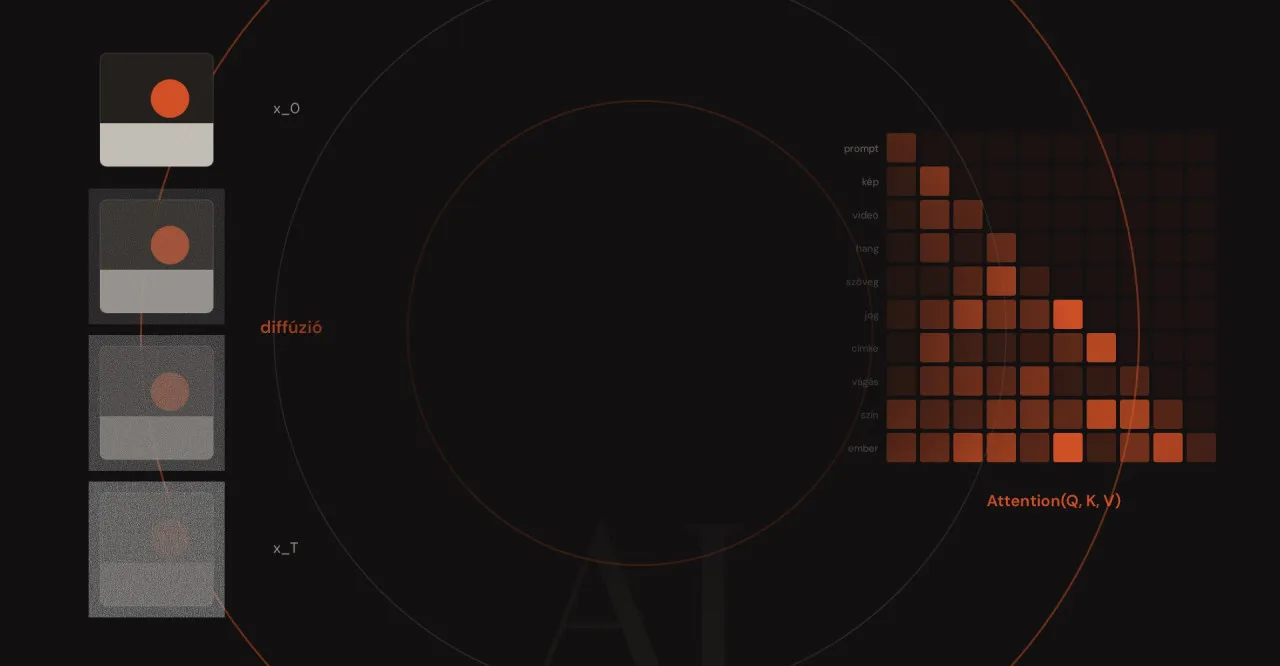
If you are also interested in the technology, a separate professional glossary on our blog explains how image, video, music and language models work (diffusion, latent space, flow matching, diffusion transformer, 3D VAE, codec tokens, transformer and attention), what they are trained on and how the data is labelled, how the output is marked (C2PA, SynthID), what the EU AI Act and Hungarian law require, which court cases are shaping practice, and how an AI search engine chooses its sources: Generative AI glossary 2026.
 Oloren Hub
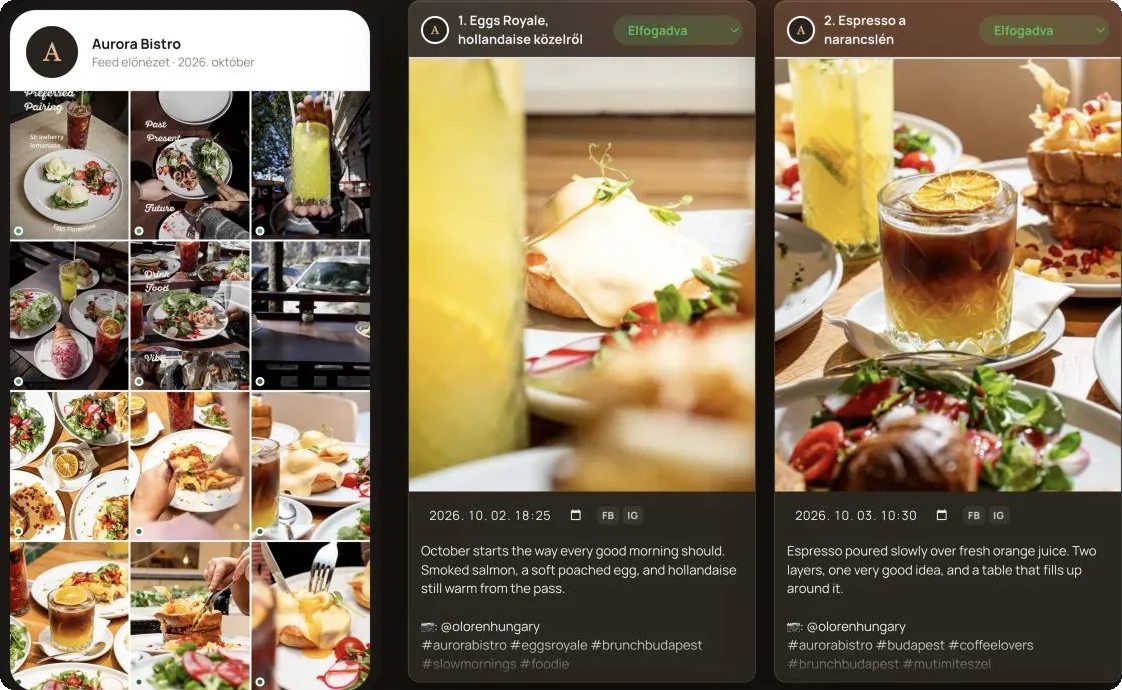
Every monthly project is a folder in Oloren Hub: post copy, creatives, hashtags and a preview exactly as it will look in the feed. At a glance you see what is ready, what waits for you and what you have approved.
Oloren Hub
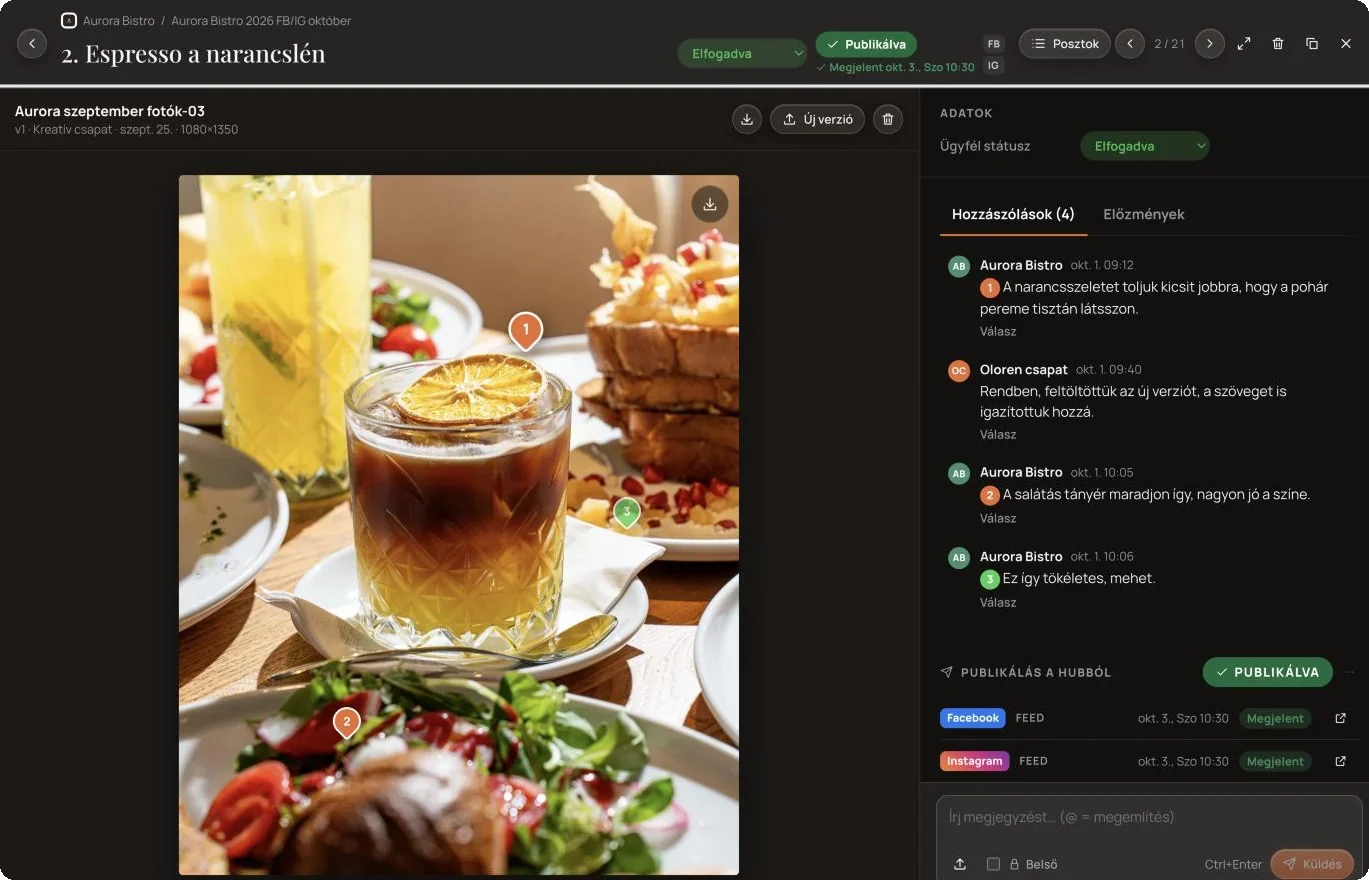
Click the image to mark what you would change, and the note stays next to that spot. The conversation, new versions and publishing status all sit next to the post, so nothing gets lost in an email chain.
Every shot is recorded to two memory cards at once, and on the day of the shoot it exists in three copies, two of them in separate buildings. Fire, water or any other damage cannot take the footage.
We work with our own equipment: Sony FX3 and A7 IV cameras, Zeiss lenses, broadcast grade sound and light. Editing and grading happen in our own studio on 10 and 12 bit monitors calibrated every year.
Tell us what kind of content you need and for which channels, and we will get back to you with a quote. All work starts after an agreement. If you are more interested in the complete content production packages, you will find them on the content production page.
We built this software and use it every day ourselves.
 Built by Oloren
Cookie consent with Google Consent Mode v2: the banner asks for consent per service, passes the decision to Google, Meta, Microsoft, TikTok and Amazon, and logs every decision.
 Free checker
Free Google Consent Mode v2 checker: in 30 seconds it shows whether your website tells Google about your visitors’ consent.
 Free checker
Free cookie checker: in 30 seconds it shows which cookies land on a visitor’s device before they consent.
Our own project hub where clients follow and approve the work: post copy, photos and videos in one place, and approved posts go live on Facebook and Instagram from here.
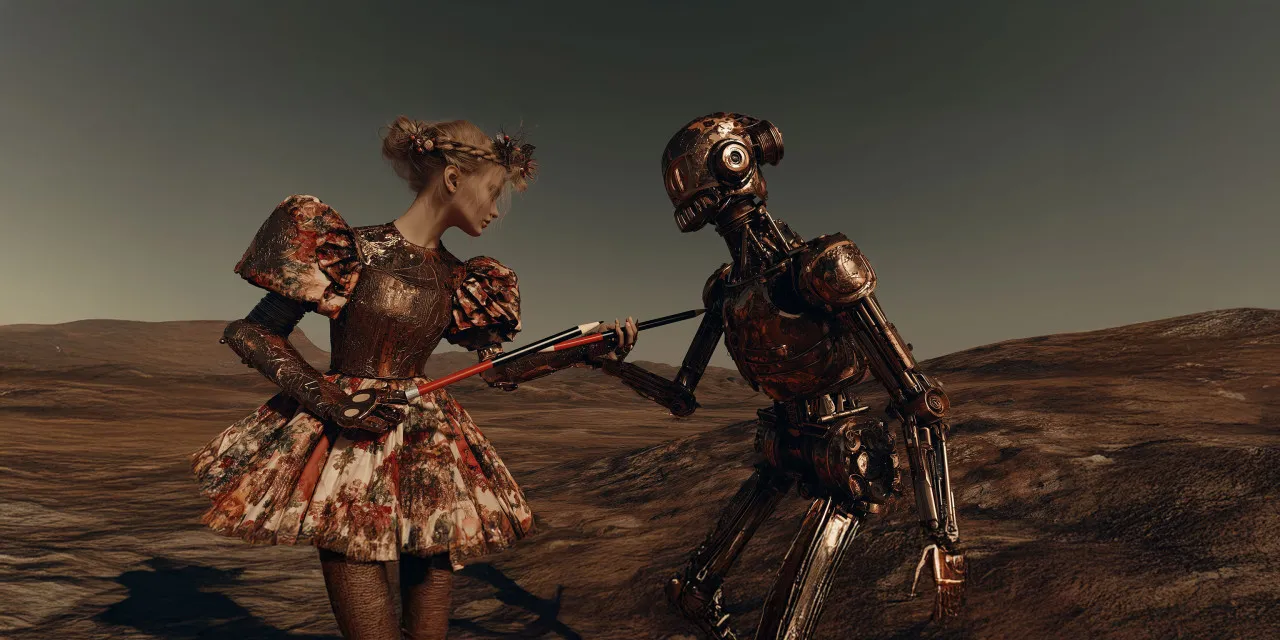
Did a robot write your post?
Read more →
Tell us how we can help and we will get back to you within one working day.
A service, reference, article, film or software